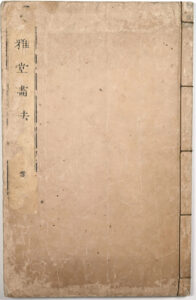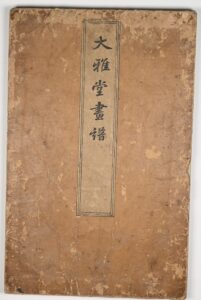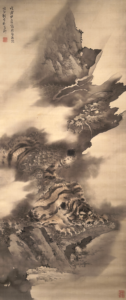
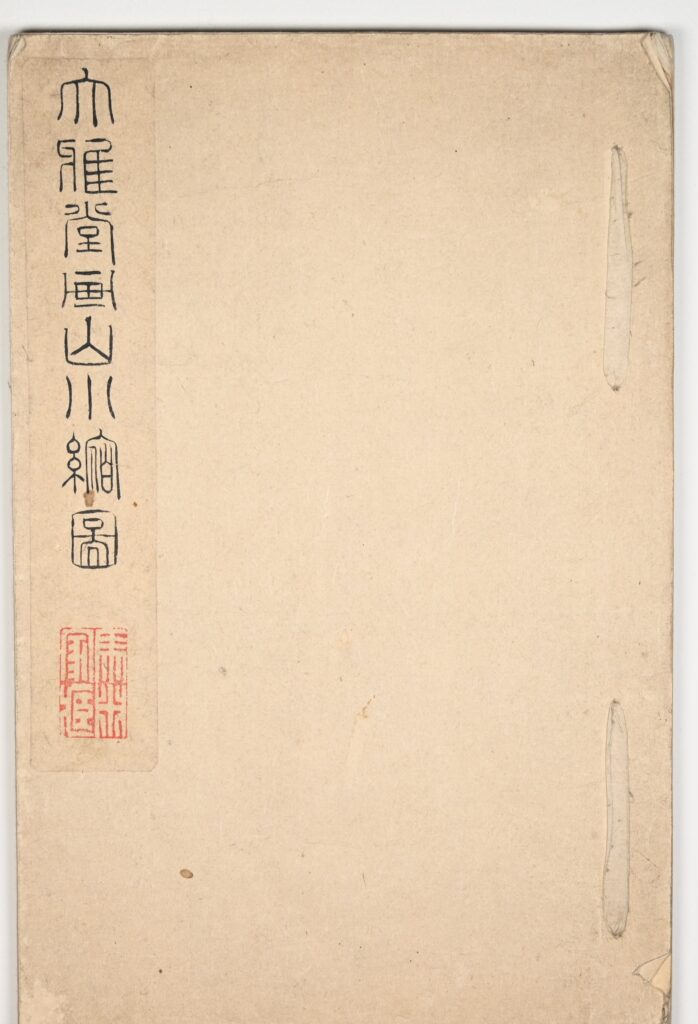
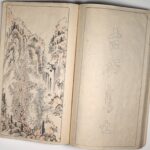
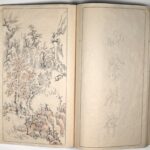
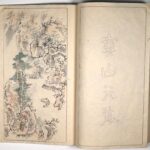
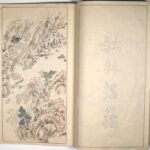
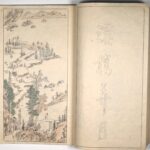
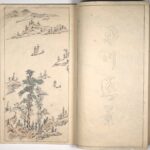
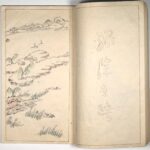
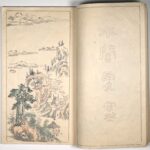
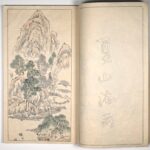
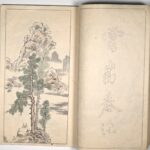
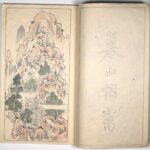
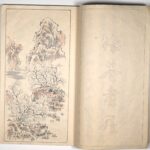
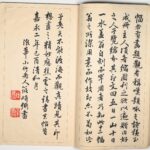
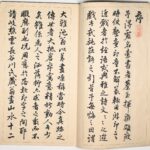
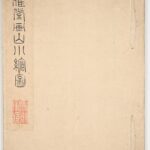
This book reproduces a pair of six-panel screens by the renowned artist Ike no Taiga. On each spread, the left page features a landscape scene, while the right page displays a corresponding four-character title in thin outline. The scenes follow a seasonal sequence from early spring to winter, mirroring the traditional right-to-left progression of a folding screen. A final page features Taiga’s signature and seals, also in outline. The use of outlined characters suggests that the calligraphy was traced directly from the original screens. Despite the much smaller scale, the book captures the essential imagery of the original work.
According to the preface by Shinozaki Shōchiku and the postscript by Monk Usō, who transcribed the titles and images, this book was commissioned by the owners of the screens, the Hasegawa family of Enai village in the Sanuki Domain (present-day Kotohira-chō, Kagawa Prefecture). While the specific commissioner is uncertain, the Hasegawa were wealthy farmers and sake brewers, known at the time for Hasegawa Satarō (1827–1898), a devoted advocate of the Sonnō Jōi (“Revere the Emperor, Expel the Barbarians”) movement.
Likely due to its nature as a private commission intended for distribution among friends, no other copies of this specific version are currently known. However, variant copies under various titles were introduced by the independent art historian Aimi Kōu (1874–1970) and have appeared in Japanese auction catalogues. Although the reference plates in those publications are small, they clearly show the titles and signatures inked in reverse, similar to ink rubbings. In contrast, this copy features the calligraphy only in outline.
This book reproduces a pair of six-panel screens by the renowned artist Ike no Taiga. On each spread, the left page features a landscape scene, while the right page displays a corresponding four-character title in thin outline. The scenes follow a seasonal sequence from early spring to winter, mirroring the traditional right-to-left progression of a folding screen. A final page features Taiga’s signature and seals, also in outline. The use of outlined characters suggests that the calligraphy was traced directly from the original screens. Despite the much smaller scale, the book captures the essential imagery of the original work.
According to the preface by Shinozaki Shōchiku and the postscript by Monk Usō, who transcribed the titles and images, this book was commissioned by the owners of the screens, the Hasegawa family of Enai village in the Sanuki Domain (present-day Kotohira-chō, Kagawa Prefecture). While the specific commissioner is uncertain, the Hasegawa were wealthy farmers and sake brewers, known at the time for Hasegawa Satarō (1827–1898), a devoted advocate of the Sonnō Jōi (“Revere the Emperor, Expel the Barbarians”) movement.
Likely due to its nature as a private commission intended for distribution among friends, no other copies of this specific version are currently known. However, variant copies under various titles were introduced by the independent art historian Aimi Kōu (1874–1970) and have appeared in Japanese auction catalogues. Although the reference plates in those publications are small, they clearly show the titles and signatures inked in reverse, similar to ink rubbings. In contrast, this copy features the calligraphy only in outline.
Title:
Taigadō ga sansui shukuzu